Wash Day in Braids: Yes, You Should (Here's How)
"Don't wash your braids" is a myth. Dermatologists often recommend cleansing coily hair and scalp about once a week, braids included. Here's a gentle routine that keeps your scalp happy without frizzing your style.
By the OLF Beauty & Hair team September 17, 2026 2 min read
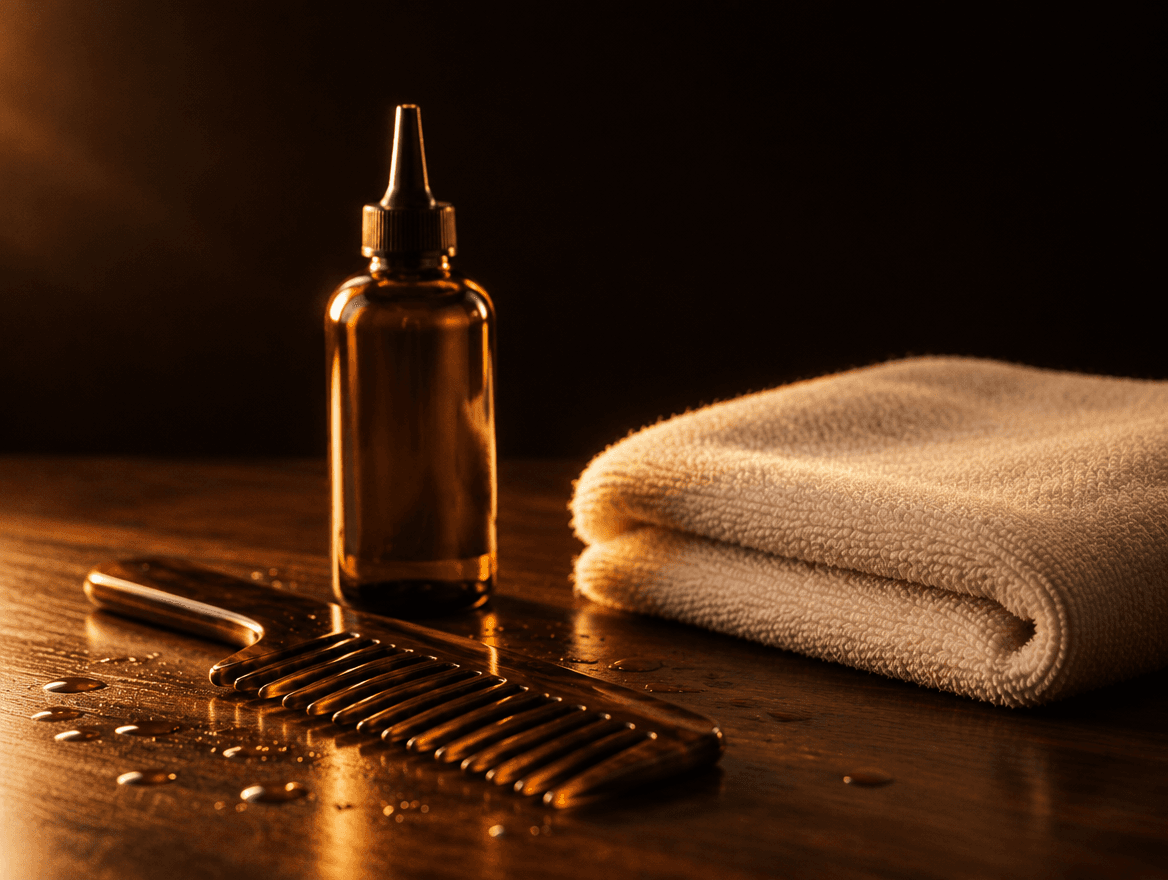 AI illustration
A lot of people go the whole install without washing, scared of frizz. We get it. But your scalp keeps doing its job under those braids: making oil, shedding skin and collecting sweat and product. Leave all of that for eight weeks and you get itch, flakes and buildup at the roots.
What dermatologists say
For people with curly or tightly coiled hair, the American Academy of Dermatology notes that dermatologists may recommend using a dandruff shampoo once a week. A 2024 paper in the Journal of Dermatology went further in its title, calling weekly washing the recommended solution for women with afro-textured hair to relieve dandruff and scalp discomfort.
A gentle routine for braids
- Dilute your shampoo. Mix a little shampoo with water in an applicator bottle. It spreads more easily between parts and rinses out cleaner.
- Focus on the scalp, not the braids. Apply along the parts and massage with your fingertips, not your nails. Let the suds run down the lengths.
- Rinse longer than you think. Leftover shampoo is a common cause of itch and white residue.
- Condition lightly, if at all, on the braids. A leave-in spray on the lengths is usually enough.
- Dry completely. Squeeze, don't rub, with a microfiber towel or T-shirt, then let the braids dry fully. Braids that stay damp at the base for hours can start to smell musty.
- Oil sparingly. A few drops on the scalp is plenty. Heavy oil on an unwashed scalp just adds to buildup.
"Won't washing damage my hair?"
You may have heard about "hygral fatigue," the idea that wetting and drying your hair over and over wears it out. Wet hair is more fragile, so handle it gently. But a beauty scientist who reviewed the evidence found no solid research showing that normal washing damages hair this way.
Itch that isn't just "dirty scalp"
Some itch in the first few days after an install can be tension or residue from the braiding hair. But persistent itch, burning, oozing or a rash can be a reaction to the synthetic hair itself. A 2025 review in Dermatitis notes that allergic reactions on the scalp can look like plain itch or even thinning and are easy to miss.
At night
Sleep in a satin or silk bonnet or on a satin pillowcase to cut friction. Just make sure the band sits gently on your hairline, not tight across it.
Sources
- AAD: Seborrheic dermatitis treatment
- Fajuyigbe et al., "Weekly hair washing: the recommended solution for women with afro-textured hair," Journal of Dermatology 2024
- Collins & Yu, "Contact sensitization to allergens in synthetic hair," Dermatitis 2025
- Mayo & Callender, "The art of prevention: It's too tight," Int J Women's Dermatology 2021
- Lab Muffin Beauty Science: The myth of hygral fatigue
For education, not medical advice. If you have pain, bumps, sores or thinning that won't settle, please see a board-certified dermatologist.