Too Tight? The Early Signs of Traction Hair Loss (and When to See a Dermatologist)
Tenderness, bumps, "tenting" and a telltale row of baby hairs. Learn the early signs your braids are pulling too hard, what's normal, and when it's time to get your scalp checked.
By the OLF Beauty & Hair team September 21, 2026 3 min read
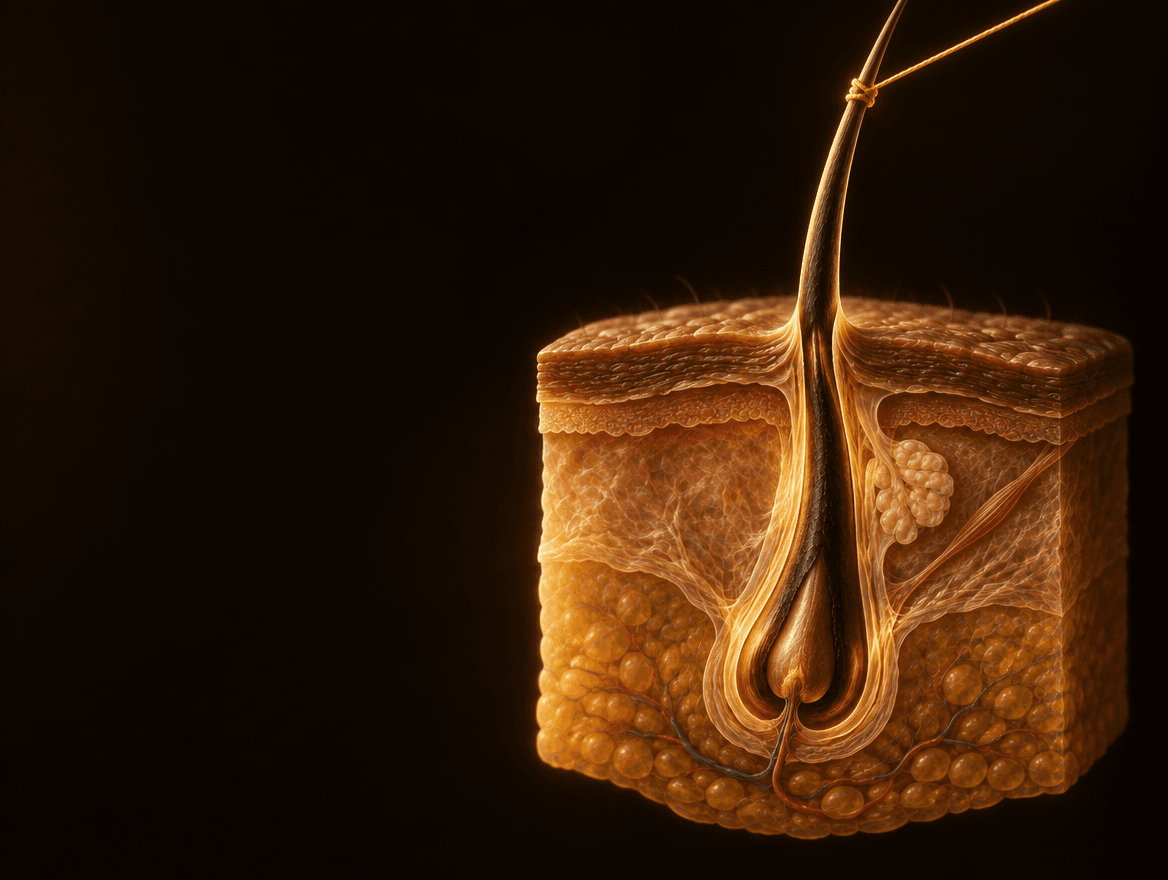 AI illustration
There's an old saying in braiding: "It's tight today, it'll loosen tomorrow." Dermatologists would like everyone to retire it. Pain after a braid appointment is one of the earliest warning signs of traction alopecia, hair loss caused by repeated pulling.
It's common. In a large study where dermatologists examined women's scalps in Cape Town, about 1 in 3 women had some traction hair loss. When extensions were added to relaxed hair, it was nearly half. And it's mostly preventable.
The early signs
The American Academy of Dermatology lists these as signs a style is too tight:
- Pain or stinging that doesn't settle
- Small bumps or pimples around the hairline or at the base of braids
- Crusting on the scalp
- "Tenting," where the skin lifts up around a braid like a little tent
- A headache or a scalp that feels sore when you lie down
The sign you can check in the mirror
Pull your hair back gently and look closely at your hairline. If you see a fringe of short, fine baby hairs right at the front, then a thinner patch just behind them, that pattern has a name: the fringe sign. Dermatologists use it as an early clue for traction hair loss. It's worth getting checked, even if nothing hurts.
"It doesn't hurt, so I'm fine"
Not always. In a clinic study of 216 people with traction hair loss, most had no symptoms, and people waited a median of 18 months before getting care. Pain is a warning when it's there, but no pain doesn't mean no problem.
Can it grow back?
Often, if you catch it early. Stopping the styles that pull can lead to complete regrowth in the early stages. Years of pulling can cause scarring, and scarred follicles can't regrow hair. There's no FDA-approved treatment for traction alopecia, which is exactly why prevention and early action matter.
Night-time counts too
Researchers have described "nocturnal traction," pulling from night-time styles like tight pineapples or a bonnet band that sits hard on the hairline. Keep night styles loose and let your bonnet rest on your hair, not squeeze it.
When to see a dermatologist
- Thinning edges, or the fringe sign
- Bumps, sores or crusting that don't clear after a style comes out
- Thinning that starts at the crown and spreads outward, especially with itch, burning or tenderness. That can be a different condition called CCCA, and early medical care can stop it from spreading. It isn't simply caused by braids, so please don't guess at home.
What to expect in our chair
- Tell us about tender spots before we start, and we'll go easy there.
- Anything you say feels too tight gets loosened. Every time.
- If your edges need a break, we'll happily suggest a slightly bigger size or a shorter length.
Sources
- AAD: Hairstyles that pull can lead to hair loss
- Mayo & Callender, "The art of prevention: It's too tight," Int J Women's Dermatology 2021
- Khumalo et al., "Hairdressing and the prevalence of scalp disease in African adults," British Journal of Dermatology 2007
- JAMA Dermatology patient page: Traction alopecia (2023)
- StatPearls: Traction Alopecia (NCBI Bookshelf)
- Khumalo, commentary on the fringe sign, Dermatology Online Journal 2012
- Samrao, McMichael & Mirmirani, "Nocturnal traction," Skin Appendage Disorders 2021
- DermNet: Central centrifugal cicatricial alopecia
For education, not medical advice. If you have pain, bumps, sores or thinning that won't settle, please see a board-certified dermatologist.